A seismic source generates waves recorded by an array of geophones. From the velocities and arrival times of reflected and refracted waves we reconstruct the seismic stratigraphy of the area.
The MASW test (Multichannel Analysis of Surface Waves) reconstructs the shear-wave velocity (Vs) profile by recording surface waves with a line of geophones laid on the ground. With the PASI GEA24 multichannel seismograph we characterise the subsurface down to a depth of 30 metres, as required by the building code.
definition of the ground type and of the design seismic action at foundation level;
assessment of the liquefaction potential of the soil;
estimate of the seismic acceleration for stability checks on slopes and retaining structures.
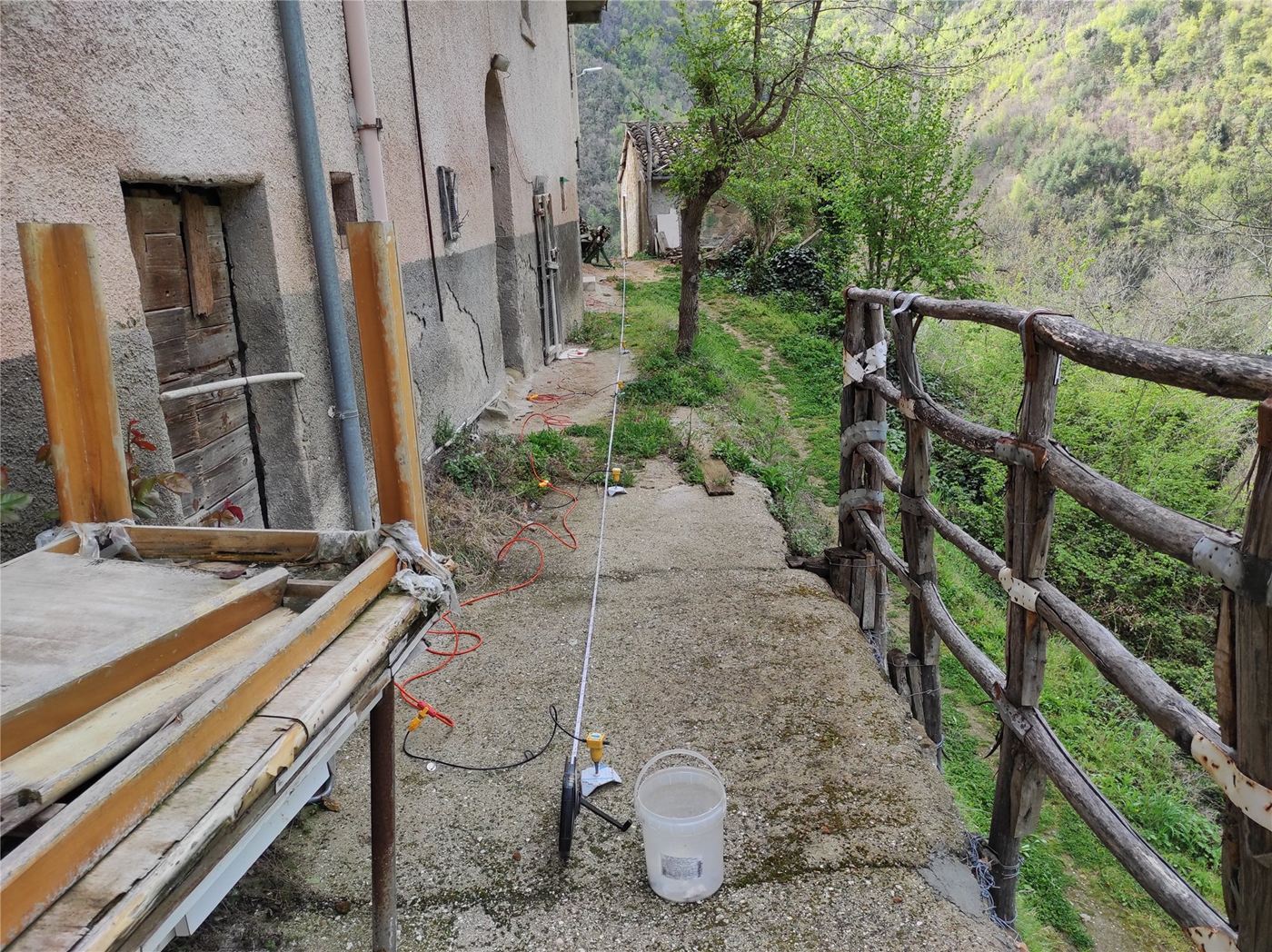
Seismic refraction P and S waves
An active, non-invasive prospecting method which, by studying the propagation of elastic waves, reconstructs the geometry and thickness of the subsurface layers, the depth of the bedrock and any lateral discontinuities.
We use the PASI GEA24 seismograph with vertical geophones for P waves and horizontal geophones for S waves.
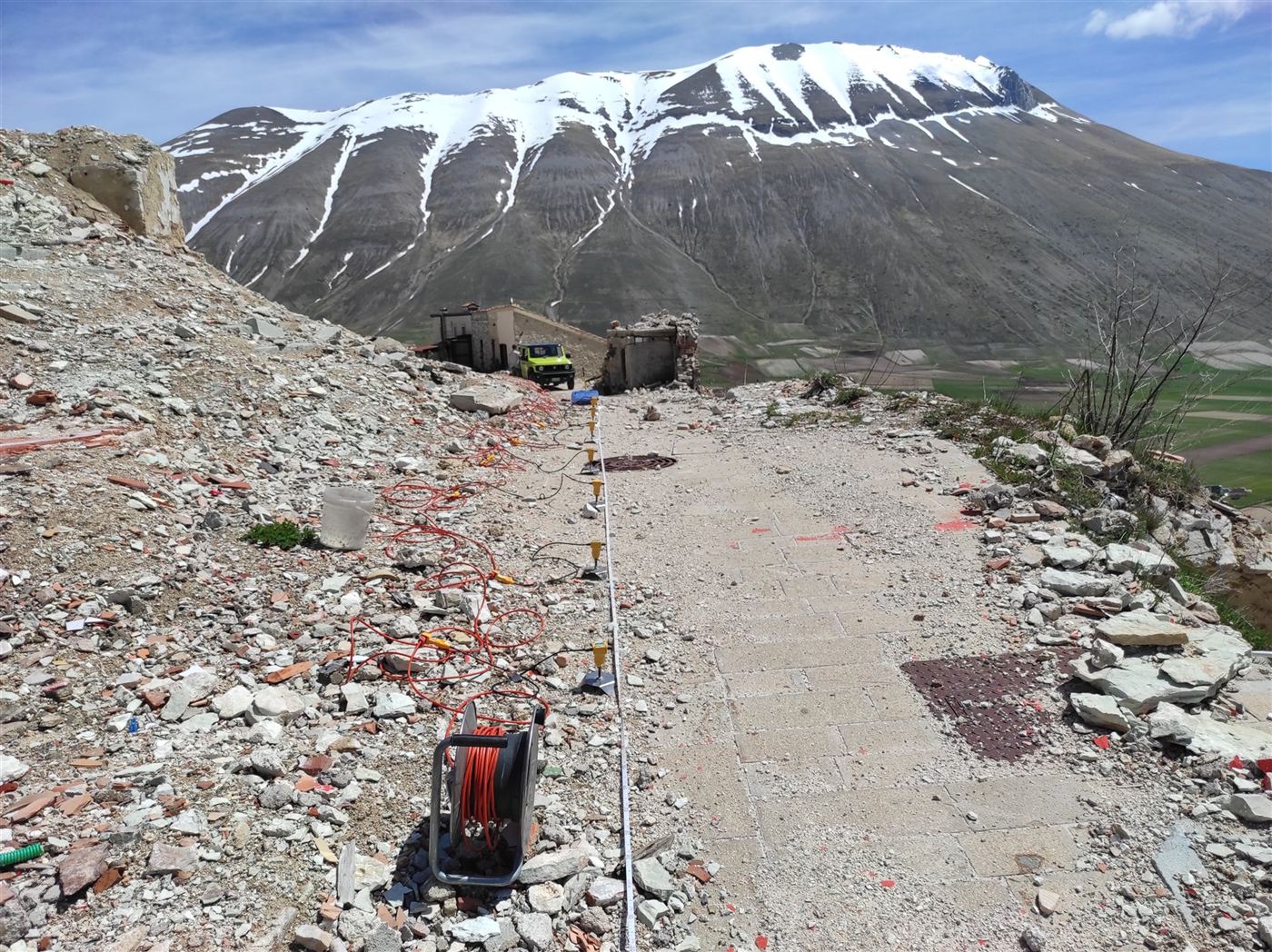
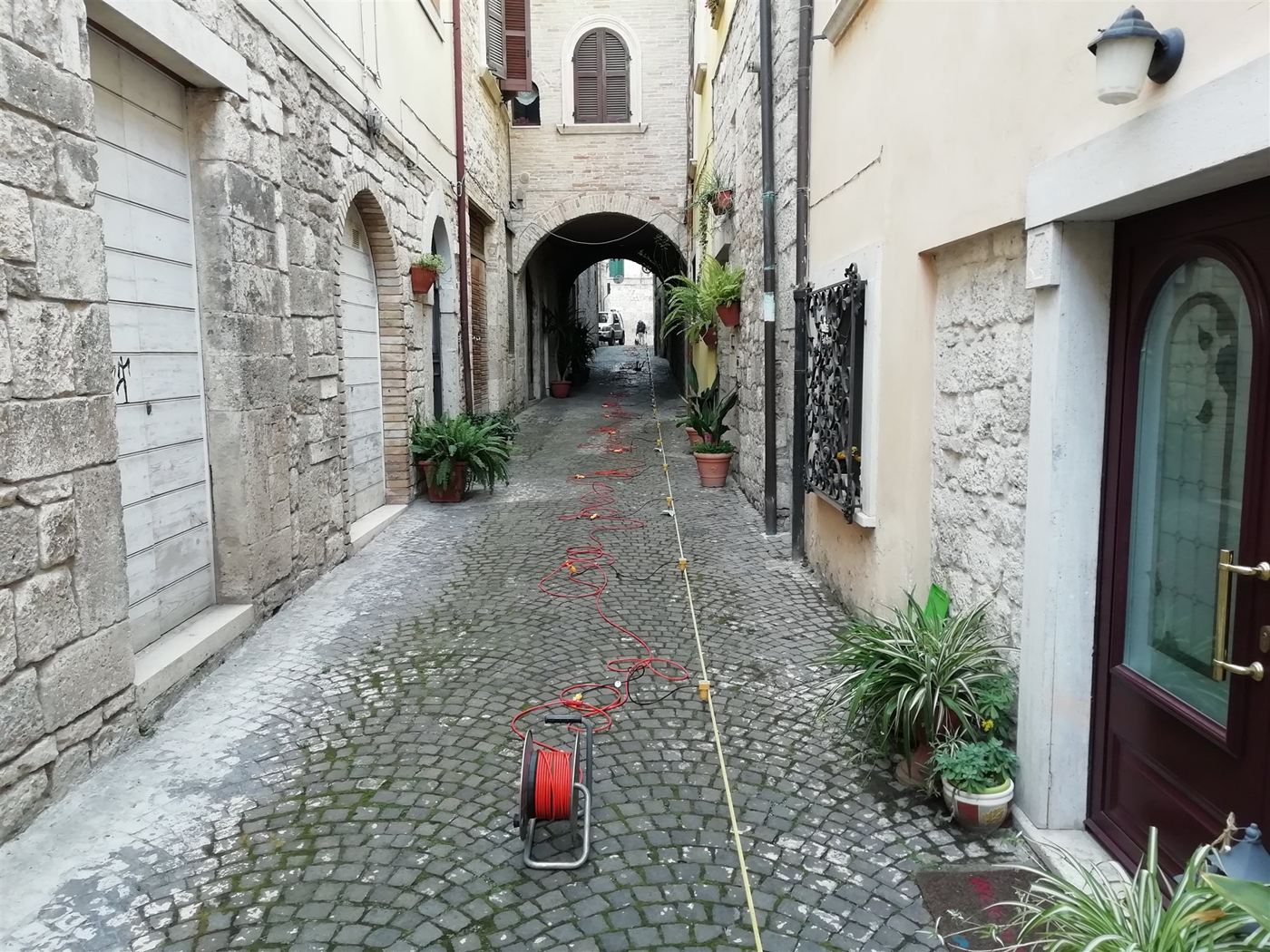
Seismic array in an alley of the historic centre.
Active borehole surveys
Cross-hole borehole seismics
The cross-hole test measures the velocity of P and S waves along horizontal paths between two or more adjacent boreholes: in one borehole the PASI source generates the waves, in the other the three-component geophone records them at the same depth, metre by metre.
It is one of the most accurate techniques for characterising individual layers of the subsurface, suited to major works, seismic assessments and highly stratified ground.
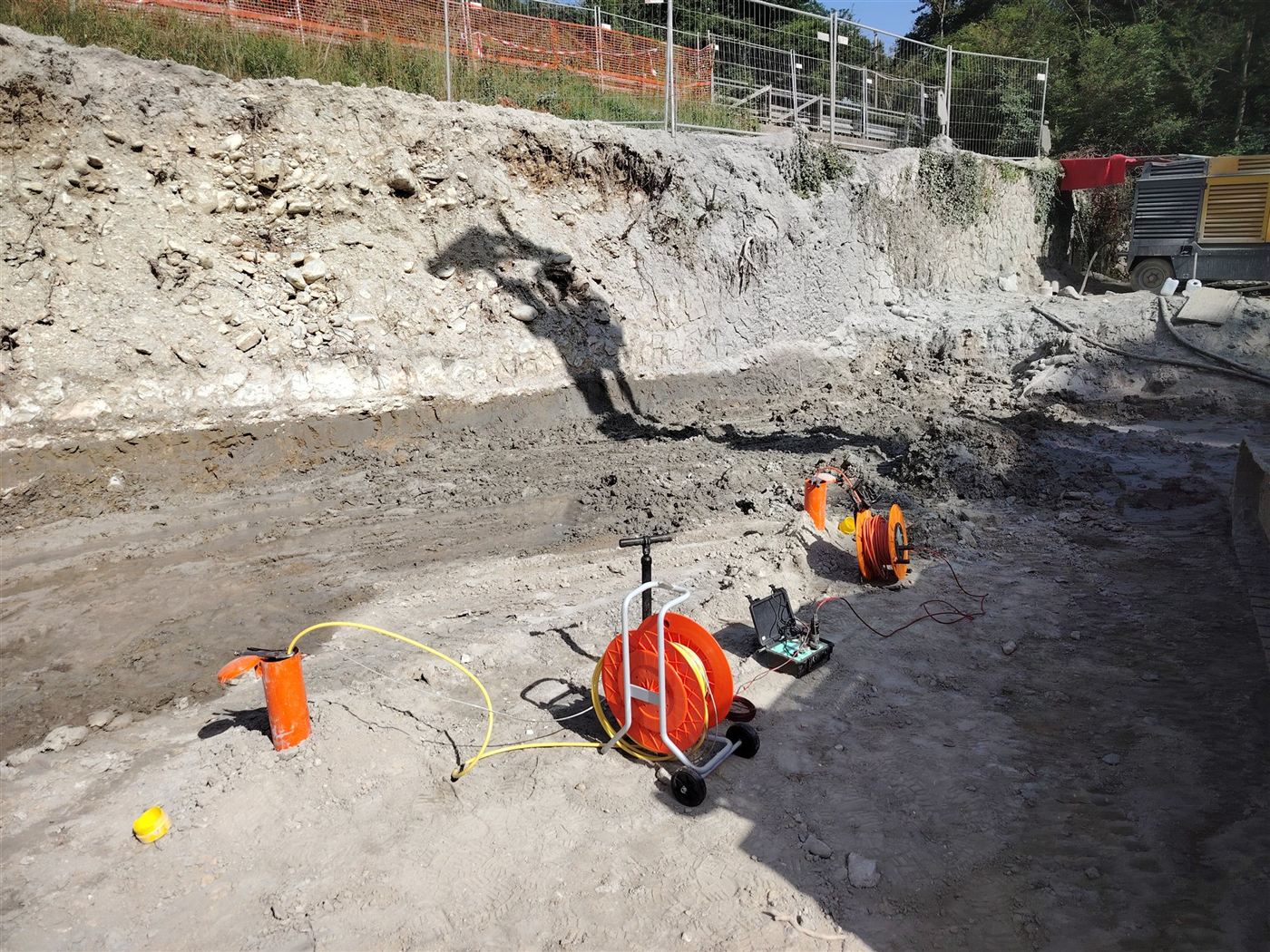
Equipment for a cross-hole test on site.
Down-hole borehole seismics
A very accurate borehole survey that determines the vertical propagation velocity of compression (P) and shear (S) waves, both as an average and by intervals.
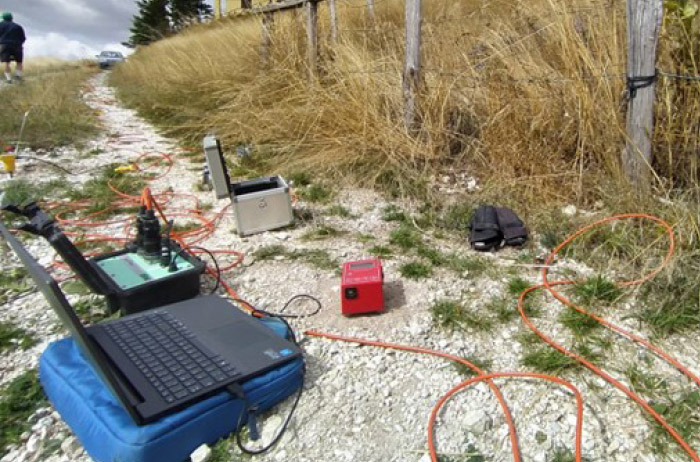
A PASI three-component borehole geophone, lowered to increasing depths and connected to the GEA24 seismograph, measures the arrival times of the waves generated at the surface. The results allow the seismic velocities to be associated with the layers identified in the borehole and the mechanical parameters of the ground to be derived.
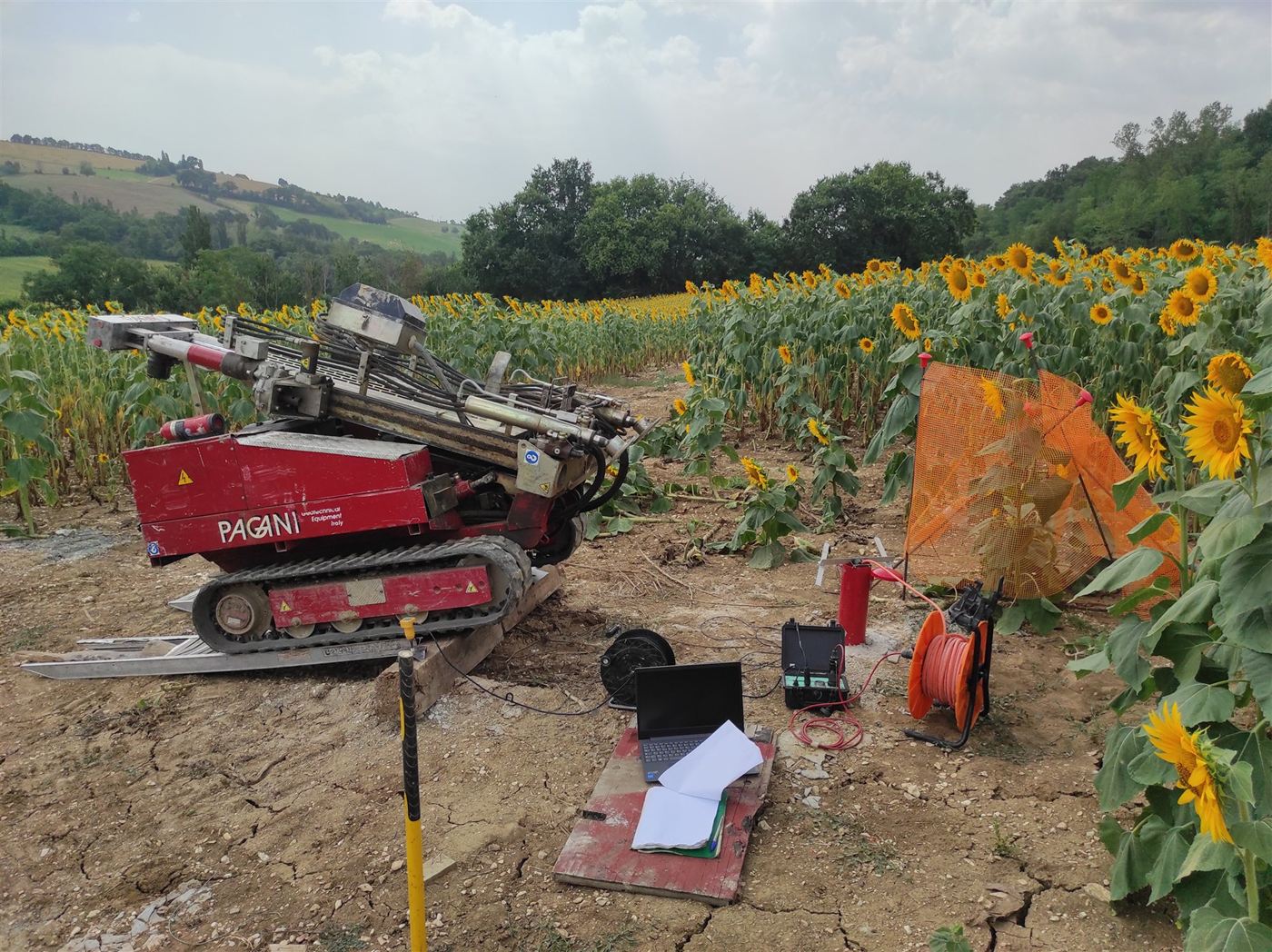
Down-hole acquisition in the field.
Passive seismic surveys
ReMi and ESAC passive seismics
The ReMi (Refraction Microtremor) and ESAC (Extended Spatial AutoCorrelation) techniques reconstruct the shear-wave velocity profile by analysing ambient seismic noise, without energising the ground and without excavations or boreholes.
ReMi uses a linear geophone array, the same as MASW. ESAC arranges the geophones in two-dimensional arrays (L-shaped, cross-shaped or circular), which record waves arriving from every direction and give a more robust estimate of the dispersion curve.
Ambient noise contains lower frequencies than those generated with a sledgehammer: passive techniques therefore reach greater depths and work well even in urban, traffic-heavy areas. We often combine them with MASW to obtain a more reliable Vs model.
Array for passive seismics.
HVSR single station
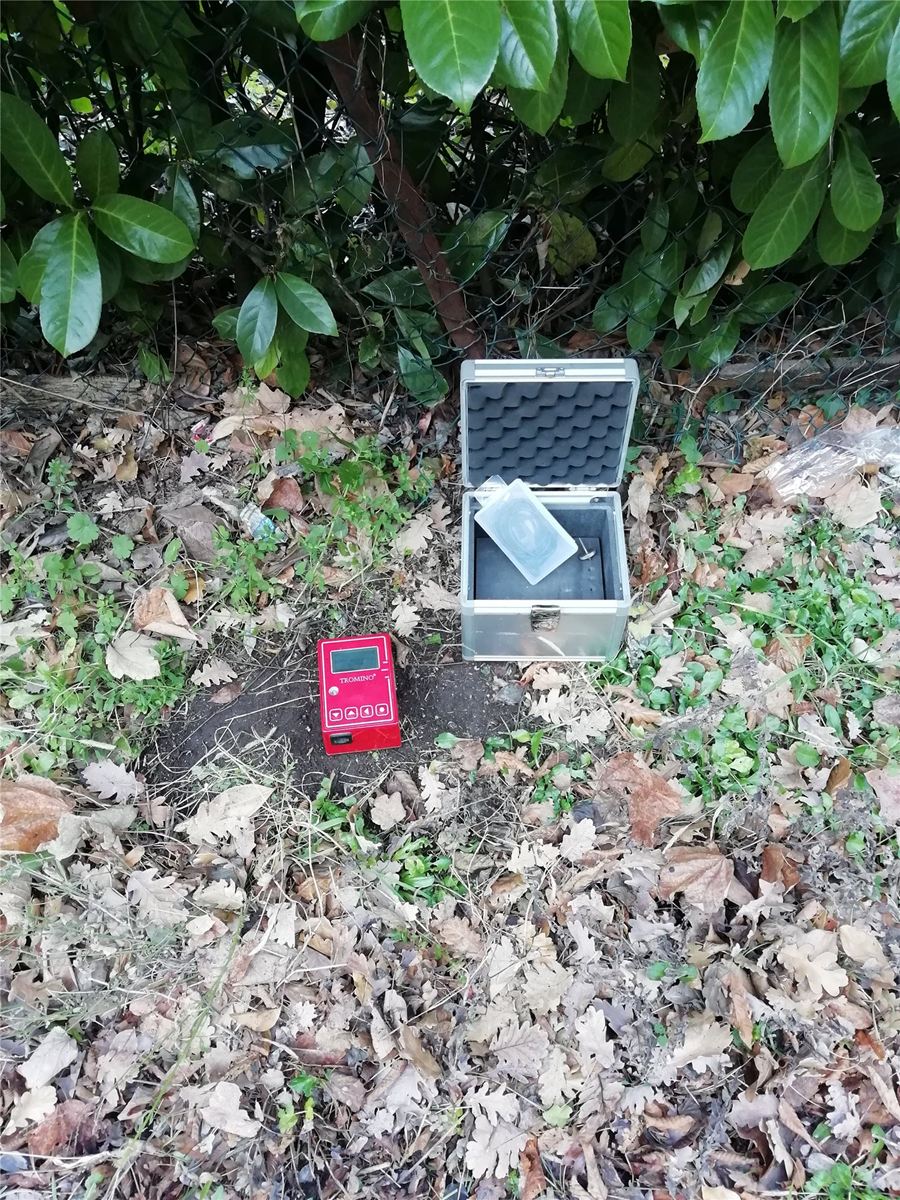
The HVSR survey determines the resonance frequencies of the ground, a key datum for assessing site effects in the event of an earthquake. We use the 24-bit Tromino digital tromograph (Micromed), which records microtremors in the three directions of space.
resonance frequency of the site;
resonance frequency of structures and buildings;
seismic microzonation;
estimate of the depth of discontinuities and of the bedrock.
Seismic reports
From the survey data we draw up the seismic reports: seismic characterisation of the site to code and 1D and 2D site response studies.
The instruments
24-channel seismograph
PASI GEA24 seismograph and geophones
The heart of our seismic surveys: P- and S-wave refraction, MASW, ReMi/ESAC, down-hole and cross-hole.
Channels
24, expandable to 48
Converter
Sigma-Delta, true 24-bit
Sampling
up to 32,000 Hz
Dynamic range
144 dB
Geophones
vertical and horizontal for surface work; three-component geophone and borehole source for down-hole and cross-hole
Case
IP67 shockproof case, 2 kg
Micromed · HVSR measurements
Tromino digital tromograph
The portable seismometer for HVSR measurements: compact and cable-free, it measures in a few minutes even in historic centres and indoors.